Tuesday, June 19, 2012

Movie Review Round Up - June 2012

Having enough time on my hands to catch a lot of big screen action, but strangely not enough to write a full length review, here's a short burst of opinions on what I've  seen this month. The lengthier reviews will be back soon. No, really.


Prometheus

Begins spectacularly. Looks stunning. Pulls you in, hook, line and sinker into an ambitious plot that's heavy with existential dread.

Then, at about the 1 hour mark, it starts to fall apart.


The very reason that Prometheus came into existence is also the albatross around its fascinating neck. This was a movie designed as, if not a direct prequel to Ridley Scott's Alien, then at least a close cousin of the movie, sharing, as Scott put it, the "DNA" of the cult film. In this attempt to link it to Alien, Scott manages to squander a fascinating premise. "Where do we come from?" is the question the movie asks as it begins, and "Why were we made?". But as it reaches its conclusion, the metaphysics is replaced with one big question: "What does the black goo do?". Prometheus doesn't actually devolve into a terrible film, just one that leaves aside the soaring heights of its initial premise to try and give us more convention sci-fi thrills.

Still, the hypnotic first hour, the beautiful visuals, and a reliably excellent performance from Michael Fassbender make this an important summer watch.


Madagascar 3: Europe's Most Wanted
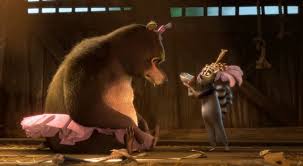

I've seen the first two Madagascar movies, and been faintly amused - and that's it. Passable, lightweight entertainment. To my delight , this third outing decides to leave behind all moorings in reality - or sanity - and delivers one of the more satisfyingly entertaining experiences I've had at the movies in a while. The plot is besides the point, the movie exists in a series of staggeringly fun set pieces. My favourite of these is probably the one where King Julian the flamboyant lemur falls for Sonja, the tricycle riding bear. Then they go to the Vatican and get married. Then they go on a honeymoon where her tricycle breaks. So of course King Julian buys her a motorbike, which she rides on the streets of Rome with wild abandon, her husband secure on her shoulders.

What, you need more reasons to watch this?


Shanghai


Having eagerly tracked Dibakar Bannerjee's cinematice oeuvre, one has come to expect genre-redefining acts from him at abandon. The charming family reverse-con in Khosla Ka Ghosla, the other side of the conman in Oye Lucky,  and of course the audacious, chilling  Love, Sex aur Dhokha.  If Shanghai fails at any point, its that it betrays that red hot streak of boundary pushing. Its an excellently made political thriller, with great all-round performances (with the exception of a somewhat grating Kalki) and a crackerjack script. The plot zips along and the pace rarely slackens from its gripping tautness. But its Dibakar Bannerjee and unfair as it is, he's led you to expect something more,  another layer perhaps, or  a moment of stunning revelation, or even unexpectedly fierce poignance. It doesn't come. Shanghai remains a fine film, one of the better Bollywood productions we'll see this year.

What it fails at is transcendence - a forgivable enough flaw.


Rock of Ages
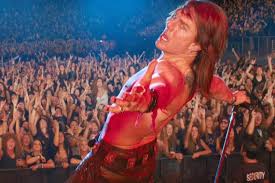
Rock of Ages has a bit of a problem. Its a 2 hour-odd film, with about an hour and ten minutes of song. The songs represent some of the 80s biggest rock hits, and are mostly sung well, if not always staged perfectly. The problem is that the other fifty minutes comprise incredibly shoddy dialogue and alarmingly hammy acting. And those imperfect staging choices? Yeah so one of them involves splicing random shots of Mary J. Blige's extremely  peripheral matter into a series of musical numbers that have no business involving her. Also, her hair goes from resembling a dying hedgehog to a glossy lion mane. 


If anything else stands out in this strange production, its the one terrific performance of the lot: Tom Cruise as rocker-of-ages Stacee Jaxx. Cruise takes the slightest of material and crafts a memorable character, one haunted by the excesses of fame. Also, he can sing. Really sing. Particularly memorable is his rendition of Bon Jovi's Wanted Dead or Alive, a performance he seems to be pouring every fibre of his being into. 

If only the rest of the movie displayed the same kind of delirious commitment. 


Friday, June 1, 2012

MEN IN BLACK III (2012)


About six hours after watching this movie, I had a flight to catch at 6 am.  My sleepy, bleary-eyed cousin kept vigil with me while waiting for the taxi when he said, "I've been thinking about it. You know that scene when J and K .... <spoilers>?"

Right there. That's the sign of a time travel film worth its salt: one that keeps you looking for inconsistencies, for how-did-they-do-thats and makes you constantly revisit the film. But at the other end of the spectrum you have those films that use time travel as a plot devise and then lazily ignore it once it has done its job (I'm looking at you, Harry Potter and the Prizoner of Azkaban).   Time travel may not have been the centrepiece of MIB III, but I'm so glad they spent enough time on a decent screenwriter to cover (most of) the plot holes.  Of course there were inconsistencies. Even my favourite time travel film is riddled with those, but in a well-made film those are less of an annoyance because there is so much more to these movies.  With humour, a fantastically gross villain and surprisingly good 3D effects, MIB III succeeded in doing just that.

Will Smith and Tommy Lee Jones don their black suits and sunglasses and take on alien criminals and scumbags for the third time.  Time travel plot line aside, was MIB III worth the decade-long wait? Did I want to be neuralysed after watching the film?  Do I want to go back in time and stop the sequel from being made?  As you can see, this post would have been far more fun to write if I hated the movie but no such luck.  It was a funny, well-made film with super action scenes, 3D that wasn't just an excuse to plunder my wallet and a fabulous revelation known as Josh Brolin.

12 years have passed since Agent J (Will Smith) joined the Men in Black. He is now a Class 1 Senior Agent, but it still rankles that Agent K (Tommy Lee Jones) isn't forthcoming and honest with him. And then they find out that the crazy powerful alien Boris the Animal has escaped from prison and is determined to never be caught again, even in the past.  He goes back in time to prevent K from ever capturing him and it is up to J to go back in time as well to prevent this from happening.... and yeah yeah, enough of this.  Let's talk about Josh Brolin.

JOSH BROLIN! He plays a young Agent K and what a fantastic job he does.  Not only does he manage to get Tommy Lee Jones' mannerisms down to a pat, but he also interprets the character as he may he been in his youth before he forgot to stop and just look at the stars, a time when a romance didn't seem altogether unrealistic. The imitation was flawless and totally believable, but without caricaturing Tommy Lee Jones and that, I think was the challenge.  The comparison to dour, old, present-day K may be funny but one can't forget how critical J is to that comparison. J is a man who never lost his sense of humour or wide-eyed idealism even 12 years after hunting down alien smugglers and slimebeasts, unlike K who built a fortress of cold rationality around him.  This gave the scenes with Josh Brolin and Will Smith a lot more depth and their camaraderie was fantastic.

The great cast was supported by a really, really funny script that took plenty of digs at '60s racist America and hippies and reminded us why we fell in love with the MIB series in the first place. Oh I know I'm in a minority but I thoroughly enjoyed MIB II (even though the de-neuralyser machine seemed like a bit of a cop-out). I was also pleased to note that there were few references to the old films and almost zero rehashed jokes. Just for not making me sit through scenes with that irritating talking dog, this film gets my vote.


The Best Exotic Marigold Hotel (2012)


There is a degree of stereotyping that comes with foreign films about India. Just as Parisians must accept accordion music and sweeping shots of the Eiffel Tower with a c’est la vie attitude, I too have come to accept the trite call-centre/elephant/bazaar scenes as unavoidable.  Without these cliches, no doubt foreign audiences would rise up in protest at having been cheated out of their money’s worth of camels and havelis.  Which is why, my only yardstick for judging the merit of a film set in India is whether nor not the film  manages to disentangle itself from the colour and the confusion of India that film-makers are so enamoured by, and whether they allow their characters to be more than National Geographic narrators.
The Best Exotic Marigold Hotel tells the story of seven British senior citizens who find themselves on a one-way journey to Jaipur for a variety of reasons.  Some are lonely, some still crave adventure, some need surgery, some have no money to live in England and others are on a personal quest.  They find themselves in a ramshackle hotel run by Dev Patel, who is also on a quest of his own: proving his worth to his family.  The seven seniors are played by a stellar cast:  Maggie Smith, Judi Dench, Tom Wilkinson, Bill Nighy, Ronald Pickup, Celia Imrie and Penelope Wilton. Yes, that’s pretty much 80% of the Britain’s Greatest Actors List.  And by God, they have proved why they’re so deserving of their numerous awards and orders of chivalry  (fun fact: there are 2 DBEs, 1 CBE and 1 OBE among them).  While it takes a director with great restraint to stop himself from making a self-indulgent film filled with long shots of palaces and elephants, scenes of characters oohing and aahing palaces and poverty and spouting patronizing dialogue about India’s rich and poor divide, it also takes strong actors to take command of their characters and really internalize their histories.
But why oh why would they ruin this movie by putting Dev Patel in it?  Every single scene with him was irritating and completely unnecessary.  His scenes with Lillette Dubey tested my patience to the utmost. I was willing to forgive this film for all its cliches, except for the big fat cliche that is Dev Patel’s story arc:  he proves himself at his job and marries the girl of his dreams. His mommy doesn’t approve.  No, really. That’s all there is.
On the other hand, Tom Wilkinson got to be a retired High Court judge who goes to India to look for his gay lover from his youth.  Maggie Smith was brilliant as a retired housekeeper battling with feeling irrelevant and her friendship with the servant at the hotel was such a natural progression.  Or Penelope Wilton, who just plain hates India: she is a perfect foil for all the tourists who are so amazed by the dust and colours while she only has eyes for the dirt and squalor. Despite playing such a disagreeable character, she manged to bring empathy and realism to her role.   And Bill Nighy!  Full disclosure: I am a little bit in love with him but that doesn’t mean that his idealism and humour wasn’t wonderful to behold. His ability to take so much pleasure in being able to fix a faucet or being able to bargain for a scarf or visiting an ancient temple may have been a bit too Incredible India! for some, but I thought his character worked perfectly in the ensemble.  The others had such sadness, longing and even bitterness in them that one needs  a Bill Nighy to remind us that one’s daughter may lose all your life savings in an ill-advised internet project but hope springs eternal.  Of course, one also needs a Ronald Pickup to remind us that there are those who are 70 years old and don’t need Viagra.
But Dev Patel.  Dev Goddamned Patel.  Every time I think of the movie and some nice line that Judi Dench spouted (as the resident narrator),  I think of Dev Patel’s smirk and his accent and am filled with blood lust.   The fact that the climax of the film was centred around him, his insipid girlfriend and annoying mother came very close to ruining the film for me.  And why did his girlfriend have to work in a call centre? She could’ve been an accountant, a salesgirl or a hedge fund managed but no, they HAD to make her a goddamn call centre employee who conveniently enough, needed to be taught about Britain by Judi Dench.  But then, Penelope Wilton snapping at Bill Nighy and telling him, “When I want your opinion, I’ll give it to you!” was priceless and saved the film.  Perhaps the ending was a little too neatly tied up, but who doesn’t love a happy ending?  All in all, A for effort.

Thursday, May 17, 2012

IN DEFENCE OF TIM BURTON


Many feel that Tim Burton has become a bit of a one-trick pony; that the whimsical genius behind Big Fish (2003), Edward Scissorhands (1990) and Beetlejuice (1988) has been replaced by a hack with a fetish for checks, swirls and Johnny Depp.  More specifically, Johnny Depp wearing white makeup and doing crazy things with Helena Bonham Carter sporting a crazy ‘do.  They also say that Burton’s typical weird world stories of monsters-that-are-misunderstood are becoming a bit of cliche.  They say that slapping on funny wigs and paint on actors with some creepy Danny Elfman music has been done and done and then done again in every single one of his earlier films.  Be it visual imagery or plot progression, we’ve seen it all (they say).
But allow me to make a case for Burton’s films.  Sure, most of them bear common motifs and trademarks, and many of them (Alice in Wonderland (2010), Planet of the Apes (2001)) cannot hope to be rescued by this apology but all his films are not cut from the same cloth, despite what popular opinion may claim.
Burton’s latest film, Dark Shadows (2012) has been accused of all of the above and panned universally.  Dark Shadows is about a rich philanderer, Barnabas Collins who philanders with the wrong girl, a witch named Angelique who curses him to an eternity in a box as a blood-thirsting vampire. He suffers for two centuries of painful solitude when he is accidentally released in the year 1972.  Imagine that.  To have to suffer the hell of isolation and and then to be subjected to hippies and disco.
Barnabas finds that even though they’re a bit low on fortune, his descendants have persisted in the grand old Collins manor.  But so has Angelique and her thirst for revenge.
The so-called Burton cliches of precocious children with a taste for the weird, Depp as an awkward fish-out-of-water fellow, Helena Bonham Carter in a funny wig and monsters with a heart of gold … are only what anti-Burtons see.  I saw one of the silver screen’s few vampires who is troubled by his eternal existence, who really feels the weight of the centuries on his shoulders, who grasps the meaning of “forever” and is terrified by the knowledge.  I saw Depp’s white face paint and anachronism, but I also saw a bloodthirsty creature unable to control itself.  I saw the beautiful Angelique who wasn’t a misunderstood monster… unless that is, you mistook her for someone who plays nice and doesn’t hold grudges. Even her ability to love is so gloriously twisted.  I saw Roger Collins, who uses his son as a lookout while he screws the coat check lady.  Or the quintessential Burton heroine, the sane-insane Victoria, who sees ghosts.  They’re a wonderful menagerie of well-developed characters, but do they make a wonderful story together?  Let’s put it this way: it isn’t the greatest epic story ever told or even Burton’s best film, but with the help of hilarious dialogue, AWESOME ’70s music that is surprisingly appropriate, Depp’s ability to get angsty without getting maudlin and some serious WTF moments, Burton weaves together an amusing Gothic soap opera that treats its characters with respect without taking itself too seriously.  It certainly doesn’t deserve the flak it’s getting.
That’s all very well, you say, but what about those very relevant criticisms levelled by Burton notfans?  To that I must ask you, are those criticisms REALLY criticisms or are Burton’s naysayers behaving like the pitchfork wielding townspeople in a Burton film, who don’t understand that it takes all kinds to make the world?  Yes, it’s a bit meta and I wouldn’t be surprised if it turned out that we’re all actually characters in a Burton film and our supposed normalcy is the source of much horror and nervous mirth for an audience somewhere… but bear with me.
One does not say that Martin Scorsese is a one trick pony because of his numerous depictions of mafia, women in white dresses and overuse of Robert DeNiro/ Leonardo Dicaprio.  Many directors have this tendency of latching onto an actor and that shouldn’t automatically disqualify Tim Burton from among the most talented directors we have today.  Does anybody think that Raphael was a hack because he regularly milked the ‘soft shadows/ light reflective colours’ cow?   Well, the Pre-Raphaelite Brotherhood thought so, but nobody cares about them.
Artists have trademarks, artists tend to go back to things they have done before, to actors and muses they enjoyed working with, artists are constantly reworking and polishing their craft and yes, often fall back on things that have worked well in the past.  One can’t fault Woody Allen for making awesome, cerebral films about love and marriage and one can’t fault Burton for his desire to drag ogres and all manner of beings from the shadows and onto the silver screen. I mean, he is practically the latter-day J.M. Barrie.  If creaky, uneven stairs get your pulse racing and you are on first name basis with the monsters under your bed, then you will never tire of Burton.   If Edgar Allan Poe had to clamour for attention with  ’Go Jane, Go’, then possibly, you may not enjoy every one of Burton’s films.
Tim Burton has struck his colours and they are checks, spirals, fog and gorgeously warped monsters. If you don’t like it, then by all means follow the direction the bony, moss-covered hand is pointing at: it will lead you out of that creaky door (with a gargoyle for a knob) to the crumbling old, ivy-covered mansion and off the nearest wind-swept, brambly cliff.

Wednesday, May 9, 2012

THE AVENGERS (2012)


Admit it.  You thought this film was going to be a self-indulgent Robert Downey Jr vehicle.  I was certain that Downey, being the most bankable star in the group would get all the limelight with some obligatory Scarlett Johansson cleavage and 30 seconds for everybody else. I expected bloated egos, one-upmanship between the A-listers, unnecessarily messy action sequences and a surfeit of CGI.  Ensemble casts can be tricky, especially when everybody in the ensemble has already had a taste of the top billing pie.  Either the actors stick around just long enough to pick up their cheques or they’re fighting each other for our attention.  Fortunately, this IS Joss Whedon we’re dealing with. A man who understand superheroes (The Astonishing X-Men) and how to bring it (Buffy the Vampire Slayer).
After five films’ worth of teasers, The Avengers film puts together the biggest and badassiest of Marvel’s superheroes.  The covert organisation S.H.I.E.L.D. is attempting to harness energy from a mysterious object, the tesseract. The tesseract opens a doorway to Loki, Thor’s evil brother who arrives on Earth, bent on wreaking destruction with the help of his mindlessly evil alien army.   In the face of certain destruction of the planet, Nick Fury, the director of S.H.I.E.L.D. decides to restart a once-abandoned scheme: The Avengers Initiative.  Abandoning that scheme was possibly the only sensible thing ever done by S.H.I.E.L.D.:  I mean, who in their right minds would put an angry/ strong green giant, a demigod of Asgard, a genetically engineered man from the 40s, a megalomaniac who hates playing by the rules and a couple of sexy assassin-spies in the same room and expect them to play nice?  Fortunately for us, S.H.I.E.L.D. values mega-awesome Iron Man v. Thor v. Captain America fight sequences over logic and prudence.
The best thing about this film is that there was none of that tedious origin stuff which is so popular these days because even superhero movies now have a chance at the Oscars.  Every single motif in the film: the heroes, the villain, the plot helper-alongers and the Macguffin are from previous films.  So they basically had to fill two hours with superhero banter,  well choreographed fight sequences and mind-blowing alien ship explosions. Check, check and CHECK! But action scenes aside, Joss Whedon and his screenwriters’ homework has paid off: they really understood their characters and their origins.  That said, the comic book references never became excessive or irritating. This film also managed to give far, far more depth to The Hulk than the two previous Hulk films combined. With all due respect to Edward Norton’s formidable acting prowess, Mark Ruffalo brought a Jekyll-Hyde facet to The Hulk which was never sufficiently believable in the 2008 film.  The allusion to the Black Widow and Hawkeye’s evil past gave their friendship depth without having to resort to exposition or flashbacks. Little touches like these ensured that no character (with however little screen time) went under-appreciated or underused.  Except for Maria Hill (played by Cobie Smulders):  Give that woman an ass-kicking role already!
I also can’t get over how excellent the chemistry between the characters was:  Everybody brought a different sort of energy to the group and managed to stand out without trying too hard.  Doubtlessly, Iron Man was the fulcrum on which the group turned and he got some very funny lines but most of them wouldn’t have worked if it wasn’t for his co-stars’ prowess.  The group dynamics evolved so naturally:  Captain America slipped into a leadership role which would never suit Tony Stark, who works better as that unbearably cool guy who regularly pisses everybody off.  The Hulk is the quiet guy in the background that everybody’s just a little bit wary of while Thor was largely relegated as the butt of all Tony Stark’s jokes but he got some sweet Mjolnir smashing scenes to make up for it.
My only not-quite-a-quibble-quibble is that Tom Hiddleston as Loki just didn’t pack enough punch, especially in comparison to the  superb development of the Avengers.  That said, I can see why they used Loki as villain and why it worked in this film.  Tim Burton’s Batman (1989)was among the first films to realize the importance of villains. Few comic book villains on screen have been as lovingly portrayed as Danny DeVito’s Penguin and Michelle Pfeiffer’s Catwoman.  The Dark Knight was almost entirely carried by Heath Ledger’s dramatic and terrifying performance.  But The Avengers didn’t necessarily need a deep and interesting villain because this film is not about that complex relationship between superheroes and villains. A non-charismatic villain worked perfectly in this film because it wasn’t so much aboutwho the villain was, but how a bunch of alpha dogs and lone wolves set aside their differences and came together to overcome their common foe.
Did Christopher Reeve and Adam West ever imagine that just a few decades after their campy, Good-versus-Evil films, this genre would evolve into something that would be taken seriously by critics?  I doubt it, but  the re-imagining of superheroes and the gritty realism that now defines this genre became inevitable after Alan Moore’s Watchmen was published and Tim Burton’s Batman films hit the theatres in the 80s.
Many have prophesied that the superhero genre is in its dying throes and Christopher Nolan’s upcoming film The Dark Knight Rises will be its swan song, but Marvel’s latest offering has proved that this genre still has a few rabbits in the hat.  Besides, if they made an Avengerssequel with Wolverine and Spider-Man joining in the fray, we’d have to come up with new words to describe the sheer levels of superbificenticity it would reach.

Tuesday, April 17, 2012

Battleship (2012)

"Mahalo, Motherfucker"


Sorry, that is the line that keeps on giving. Uttered by Rihanna (yes she plays some officer character in the film, but let's face it, she was only cast so that people like me could gasp and scream her name everytime she's on screen) late into the film as she prepares to blast an alien ship to smithereens, it captures the essence of Battleship.

Look. Hollywood summer blockbusters can be smart and engaging and entertaining. Just ask The Dark Knight.  But they can also be as crass and stupid as Michael Bay's Transformers sequels. What makes Bay's ilk infuriating is the strange insistence of those movies to take themselves seriously. We're watching giant hunks of metal slamming into other giant hunks of metal. The least you can do is make it as ridiculously silly and glibly entertaining as possible.

This is where Battleship wins. From its opening moments, it plays as a joyous ode to its crash-and-smash bretheren, not just embracing their cliches, but cranking them up to the extreme. Not one line is subtle, not one character underplayed. Characters do really, really stupid things - the opening sequence has Taylor Kitsch getting electrocuted by a tazer gun in his quest for a chicken burrito to impress a girl at a bar. In a later scene he gets electrocuted by climbing onto an alien ship docked in the middle of the Pacific Ocean. No wonder his hair's all spiky.

Great art this is not, and obviously could not have been. Its based on a BOARD GAME for crying out loud. This is where the film has its most ingenious moment - I mean, you'd think that a movie version of Battleship shouldn't have an extended sequence where the characters literally sit and play the game onscreen would you? Because, you know, that would be crazy? And boring?

Well, Battleship doesn't think so, no sir. It goes ahead and does just that, but again, the sheer goofiness of the moment is undercut by how strangely exhilarating it is. And that's what ultimately makes the movie work - if you're willing to embrace how brazenly silly it is, how its still managing to take all of that and craft genuinely exciting and suspenseful action moments, and how it features Rihanna uttering the immortal words - say it again, MAHALO MOTHERFUCKER!!! - well, you've got yourself a winner Hollywood.

p.s. Yes, I am aware that I haven't discussed the plot at all. As you may have realized, awareness of the same is only very incidental to enjoying the movie. In some instances, it may even go against it.


Saturday, March 10, 2012

JOHN CARTER (2012)


So here's the thing: I love the Barsoom series and have been looking forward to this movie for months now, what with that epic trailer that totally targeted the people-with-good-taste demographic.  Which was why I was a little surprised and very nervous to find that the cinema hall was entirely comprised of, hmm, how to say this nicely...  The Clash of the Titans demographic.  How could the Disney marketing machine have screwed up so?  Or, could it be that this was the film's intended audience?  No wonder friends who think Michael Bay is a great and nuanced director turned their noses up at this film!  I assumed that there was no mention of the 1917 book series in the trailer because of typical geek snobbery ("if they don't already know the books exist, then they don't deserve to know") but it is more likely that they didn't want to scare off new audiences with all that talk about pioneering series that invented pulp sci-fi genre because everybody knows that there is no pay-off in pandering to the geeks.  But in spite of these harsh truths,  I enjoyed the film immensely (with some quibbles of course).

But I must offer a word of caution to new fans and old.  I know that it is not a good sign when a film is preceded by disclaimers, but it is vital to remember that this book this film is based on was written almost a hundred years ago.  It was written in a time when Mars was for all practical purposes, as distant as the farthest galaxy because space travel was an absurd daydream and when science fiction resembled fantasy.  I wish CGI and motion capture technology existed 90 years ago, because that was when this film ought to have been made.  People would then realize that John Carter is not derivative; it is in fact, the inspiration for every single space opera we know and love. Edgar Rice Burroughs was a visionary who, not only inspired Golden Age sci-fi authors but also counts several scientists and astrophysicists among his fans. It wouldn't be an exaggeration to say that without Barsoom, there may have been no Spirit or Opportunity on Mars.  Which is why I'm glad this film got made-- better late than never.

This film tells the story of John Carter, an American civil war veteran who is mysteriously transported to an inhabited, dying planet, Barsoom, and finds himself embroiled in the deadly power struggles of the people there.  There are the strange and alien-looking Tharks-- a savage, uncivilized, patriarchal race lacking in human sentiment and vision. There are the Red Martians-- a highly developed humanoid race locked in civil war. And then there are the mysterious Therns, dismissed as legend by most. Here Carter finds unlikely allies: the beautiful Red Martian princess, Dejah Thoris, an unusual thark named Tars Tarkas and the world's most faithful dog, Woola.

While it wasn't perfect, I think director Andrew Stanton did a fantastic job in bringing to life Burrough's creation. This film did not blow my socks off, but it drew me into its immersive and beautifully drawn world.  Like the books, this film sometimes sacrificed narrative in order to focus on the characters' conflicts, on Carter's frustration and admiration of the Martians, and of course, the dizzyingly  fast plot.

The film's greatest weakness was introducing too many elements and then glossing over them all in the climax. I understand that they were trying to  give texture to Barsoom, but the end result was hurried and confusing.  I would have also loved to have seen more of Tars Tarkas (voiced by Willem Dafoe) and the other Tharks.  That said, the characters' screen time was used effectively:  a short scene about the Thark hatchlings tells us so much about all the characters and Thark society.  I am also glad that they did not use Barsoom as an unsubtle metaphor for the global recession or some such nonsense.  The film creates an alien and fantastical world that leaves you wanting to delve deeper into its mysteries.

If the film had more closely followed the book, it would have been derided as an Avatar knock-off and would've resulted in far fewer "Whoa!" scenes in the trailer.  Besides, merely enacting page after page of the book is doing a disservice to it; films and books are too different to merely mimic each other.  The script-writers cleverly expanded on the Carter universe by borrowing threads from across the Barsoom series and have ultimately stayed true to Burrough's vision.

Maybe it's just me and my dreadful addiction to nostalgia, but after watching this film, the night skies seem a little friendlier.  How can there not be a Tars Tarkas or a Kantos Kan out there? In any case, I am calling eternal dibs on the dog name Woola, for the loyal and tenacious pup that I will adopt some day.